Introduction
Time and energy are the most important aspects when looking for new work. It’s essential to internalize the fact that everyone has the same 24 hours a day. The success or failure of an action depends on the energy we choose to spend on a specific area. Therefore, it is crucial to channel our energy correctly throughout the day by breaking it into smaller, manageable chunks.
Visualize your day in terms of minutes.
It’s easier for us to experience a minute than an hour. Planning your activities based on the number of minutes makes it easy to stay on track and see results.
Hours To Minutes
24 hours in a day = 1,440 minutes (24 hours * 60 minutes)
How we choose to spend the 1,440 minutes in a day determines how quickly we can get back on track in our job search.
My break down of activities in a day.
- Practice Presentation – 45 Minutes.
- Apply For Job(s) – 60 minutes or 1 hour.
- Learn A New Skill – 240 Minutes or 4 hours.
- Workout – 60 mins or 1 hour.
- Respond to emails – 180 minutes or 3 hours.
Practice Presentation – 45 Minutes:
The skills required for work differ from those needed for an interview, although some overlap exists. During an interview, there is a high emphasis on how you present yourself. This starts with how you present yourself to a recruiter or hiring manager, all the way to how you present yourself to the interviewing team(s). It begins with an inventory of transferable skills that match the job description and the required hard and soft skills. The most important aspect is the choice of words we use when explaining our value and what we bring to the table.
To ensure we use the right words and present our expertise correctly, we need to prepare a script for a question like “Tell me about yourself,” which should take no more than 5 minutes. Creating a script for this question is easy, but most candidates overlook the challenging part, which is how they present it.
I recommend practicing the script for around 30-45 minutes until you are comfortable and confident in presenting it. Eventually, you should be able to present it in just 15 minutes. Presenting yourself daily until you secure a new offer is also important.
Applying for Jobs: A 60-Minute Daily Practice.
To get a job, you need to apply for one. It’s as simple as that. Unfortunately, many job seekers overlook the importance of applying for jobs consistently. This is especially true after experiencing a layoff. While applying for jobs initially seems overwhelming, consistent daily practice can make it a normal part of your routine.
Let’s do the math: If you spend 10 minutes reading each job description, you can easily apply to 5-6 jobs per day.
I set a target of 5-10 job applications per day. Applying to 5 jobs a day means that in one week, I applied for 35 jobs per week (7 days * 5 jobs per day. Yes, seven days a week – there are no weekends during this phase). Over four weeks, that amounts to 140 applications (35 applications * 4 weeks).
The key aspect of this activity is consistency, not just the number of applications submitted on a given day only. Once you build the consistency muscle, it becomes much easier to reach your destination.
Learn A New Skill – 240 Minutes or 4 hours.
Every job needs special skills targeted toward the duties. Learning a new skill takes time and practice. Adding a daily habit of learning a new skill is an important activity for the people in the job(s) and those looking for new work. We paid for the value in the form of skills we bring to the organization. The skills can be hard skills as well as soft skills. Looking at my kid’s course curriculum is the best way to see the skills matrix.
For. e.g.: – A sample from my kid’s course on IXL
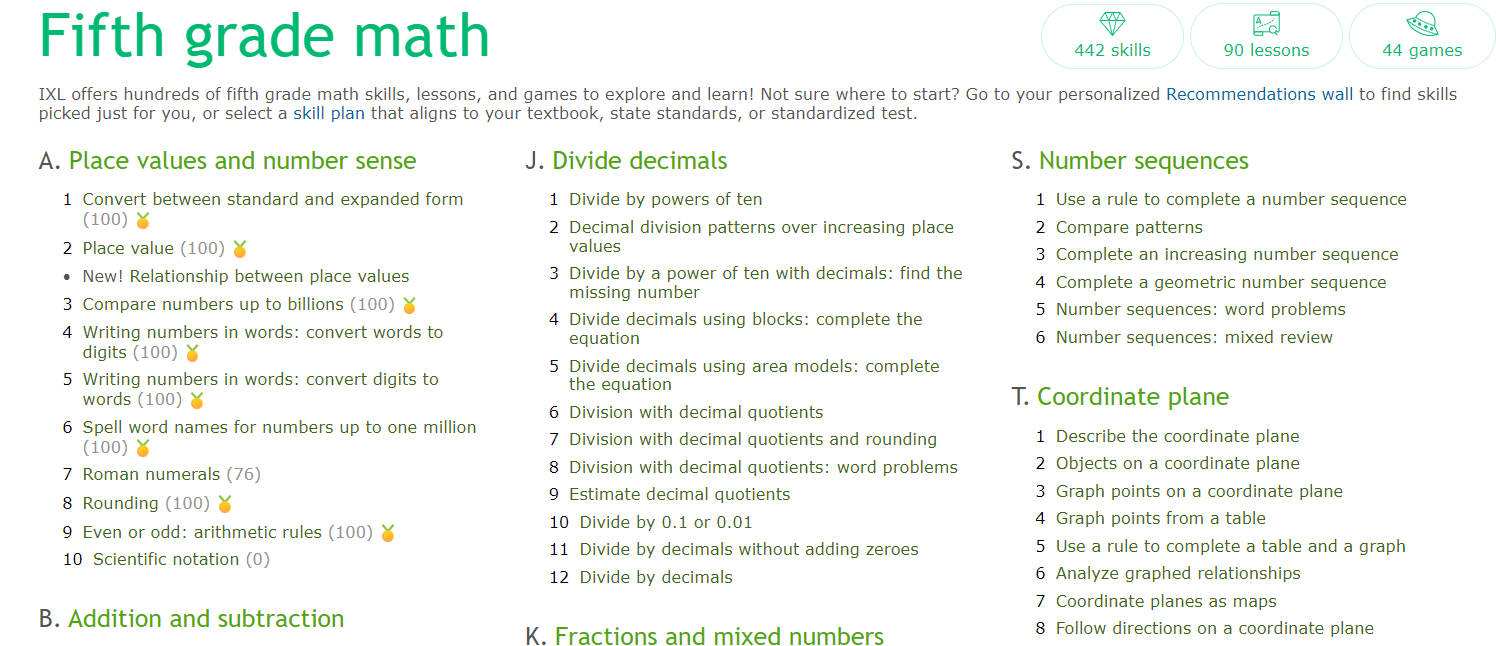
Just as the kids’ course is broken down into skills, our job responsibilities are divided into a skills matrix. It is important to be aware of the required and associated skills and to keep practicing them. Each new skill you learn will increase your confidence in your abilities and improve your confidence in job interviews.
Consider using the Pomodoro technique to enhance your studying. You can also research other techniques to gain ideas on how to study effectively.
Workout – 60 Minutes or 1 Hour
As mentioned in the introduction, time and energy are crucial aspects when searching for new work. The success or failure of our actions depends on how we choose to spend our energy in specific areas. It’s important to channel our energy correctly throughout the day by breaking it into smaller, manageable chunks. When it comes to performing at a high level during job searching, which involves acquiring new skills, updating resumes, taking calls, attending interviews, and many other tasks, we need energy.
Working out in the morning is a game changer for my daily activities. Once I complete my morning workout, the rest of the day seems like a breeze.
Responding to Emails – 180 Minutes or 3 Hours
Responding to the various emails you’ll receive is equally important during the job search phase. Different recruiters and hiring managers may use different modes of communication, such as email, text messages, LinkedIn messages, or phone calls. It’s important to respond to people using their preferred mode of communication.
To save time and energy, batch processes them twice or thrice a day instead of responding to emails or phone calls as you receive them. Spend 60 minutes in the morning, 60 minutes in the afternoon, and 60 minutes before bed, responding to all of them simultaneously.
💡 I used to request that interviews be scheduled in the second half of the day.
💡 Do pushups before attending the interview to increase your energy and focus.
Conclusion
Job searching is a careful investment of time and energy. Creating a plan for investing your time and energy during this phase is important. Create dedicated time blocks and work within them. This schedule may work for you, but it may also need to be tweaked to fit your specific needs. Experiment to find out what schedule works best for you. While a planned schedule can work for everyone, it needs to be customized by each individual.
What are your thoughts on this schedule?
Do you have any ideas for making it more effective?
 Devakumar Sai Chinthala